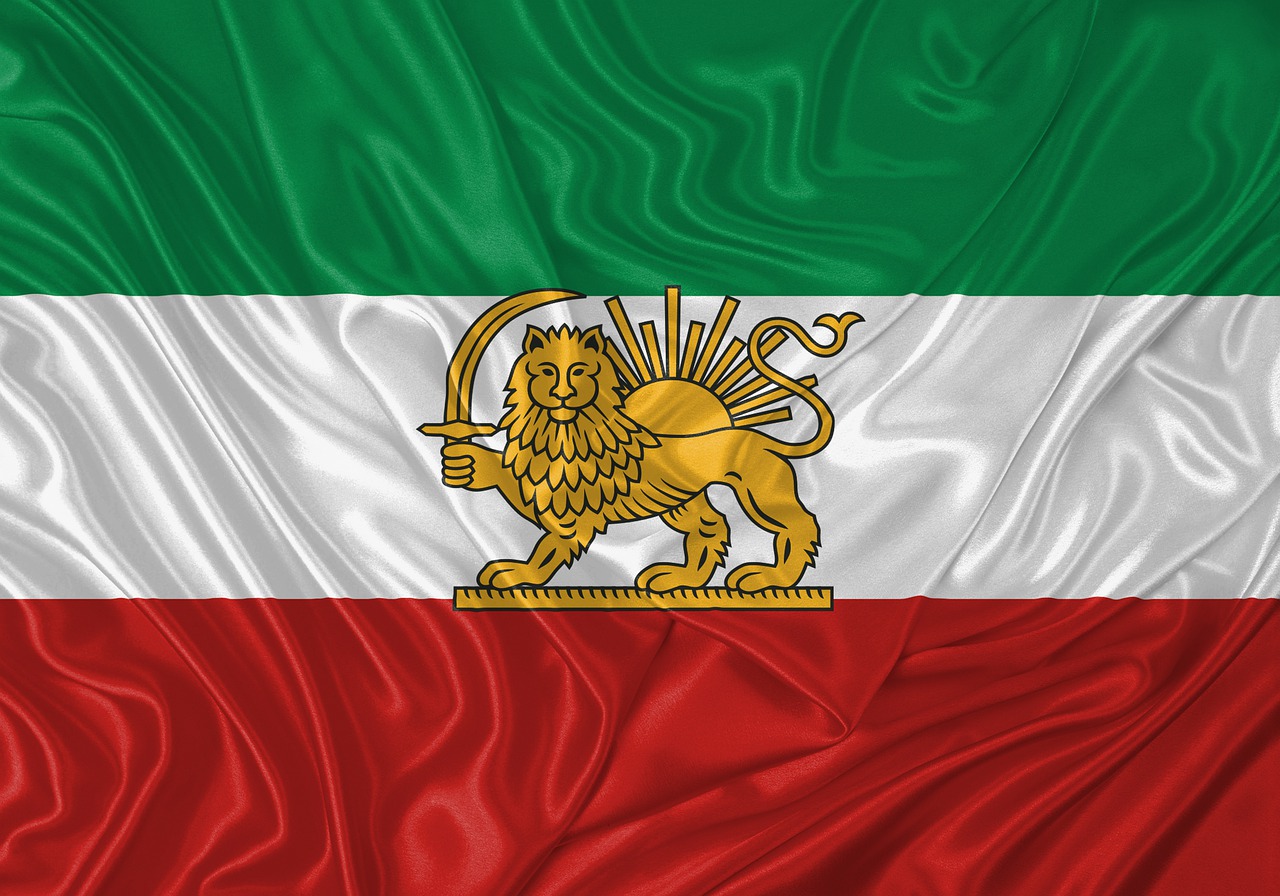
Resources Related to Iran
For Americans in Danger Abroad
STEP — Smart Traveler Enrollment Program
A free U.S. State Department service that lets you register your travel so the nearest embassy or consulate can send you safety and security alerts — and contact you or your emergency contact in a crisis. Essential for any American in or traveling to a high-risk country.
Travel.State.Gov — U.S. State Department Travel Hub
The official U.S. State Department travel portal. Find country-specific travel advisories, emergency assistance resources, passport replacement services, and support for U.S. citizens in crisis abroad. Emergency line: 1-888-407-4747 (U.S./Canada) or +1-202-501-4444 (international).
Register.State.Gov — Contact the U.S. State Department
Reach the U.S. State Department directly. Use this portal to contact your nearest embassy, report an emergency, or request consular assistance if you are an American in danger abroad.
The Fallen
We remember those who gave their lives for freedom. Every name here is documented with sources from credible human rights organizations or major news outlets.
Amirali Darabi
Amirali Darabi was a young man from Chalus remembered as a hero, not a number on a burial paper. This post stands as one of many atrocities committed by the Islamic Republic regime in Iran. #AmiraliDarabi #FreeIran #NoToIslamicRepublic #StopIRGC #HumanRights #IranianLivesMatter
The Hill — U.S. Casualties Rise to Six in 'Operation Epic Fury' Against Iran
Six U.S. service members have been killed in Operation Epic Fury, the joint U.S.-Israeli military campaign targeting the Islamic Republic's nuclear program, ballistic missile arsenal, and terror networks. Authorized by President Trump, the operation marks a direct and significant military confrontation with the Iranian regime.
Radio Free Europe / Radio Liberty — Interactive Map of Killed Protesters
An interactive map documenting individuals reported killed during protests in Iran, compiled from credible human rights sources and eyewitness accounts.
Instagram — Documented Accounts of the Crackdown
Firsthand accounts and documented footage of the regime's crackdown on protesters, shared via social media.
Iran Human Rights — Unreported Atrocities: Eyewitnesses Detail Massive State Crackdown
Eyewitness testimonies detailing a massive and deadly state crackdown against protesters across Iran's provincial cities — killings that were systematically suppressed from public reporting.
The New Yorker — A Massacre in Mashhad
A firsthand account of the massacre in Mashhad during the January 2026 crackdown, published by The New Yorker.
Take Action
Disclaimer
This page provides informational resources for peaceful advocacy only. All email templates are copy/paste only — no automated sending. All event listings are based on publicly announced information from official organizers. This site does not collect personal information, facilitate mass contact, or automate any outreach.
Submit a Name — Morad Vaisi's Public Call to Document the Fallen
Journalist and Iran analyst Morad Vaisi (@RezaVaisi) has issued a permanent public call to collect the names of those killed by the Islamic Republic. Reply to this post with the victim's name, age, date, and the city where they gave their life. Every name matters — reply to help build the permanent record.
Submit Victim Names of the Fallen (Review Only)
Important notices before submitting:
- Do not include sensitive details — no addresses, private phone numbers, or any information that could endanger individuals still inside Iran or their families.
- Submissions are reviewed before being published. Nothing is auto-published. Expect delays.
- Only submit information about individuals who have already been publicly reported by credible news sources or human rights organizations.
Email Templates
Copy and customize these templates to contact your representatives, media outlets, and international bodies. Fill in bracketed placeholders before sending.
Contact Your Representative — Sanctions Accountability
To: U.S. Congressional Representatives
Contact Your Representative — Sanctions Accountability
To: U.S. Congressional Representatives
Subject
Support Accountability for Iranian Regime Human Rights Abuses
Body
Dear [Representative Name],

I am writing as your constituent to urge you to support stronger accountability measures for the Islamic Republic of Iran's ongoing human rights abuses.

The regime continues to execute political prisoners, imprison journalists and activists, and suppress peaceful protest. I urge you to:

1. Co-sponsor legislation imposing targeted sanctions on Iranian officials responsible for human rights abuses.
2. Publicly call for the release of all political prisoners in Iran.
3. Support funding for independent Persian-language broadcasting that reaches Iranians inside the country.

The people of Iran are fighting for the same values — freedom, dignity, and self-determination — that our democracy was built on. I urge you to stand with them.

Respectfully,
[Your Name]
[Your City, State]
Contact the UN Human Rights Council
To: UN Human Rights Council
Contact the UN Human Rights Council
To: UN Human Rights Council
Subject
Urgent: Accountability for Executions and Political Imprisonment in Iran
Body
To the UN Human Rights Council,

I am writing to urge the Council to take immediate and decisive action on the ongoing human rights crisis in Iran.

Since the 2022 uprising, the Islamic Republic has executed dozens of protesters, imprisoned thousands more, and systematically targeted women, ethnic minorities, and LGBTQ+ Iranians.

I urge the Council to:
- Maintain and strengthen the Special Rapporteur mandate on Iran.
- Formally document and preserve evidence of crimes for future accountability.
- Publicly condemn the use of execution as a tool of political repression.

The people of Iran deserve the protection of international human rights law.

Sincerely,
[Your Name]
Write to Your Local Media Outlet
To: Local or National News Editors
Write to Your Local Media Outlet
To: Local or National News Editors
Subject
Coverage Request: The Ongoing Fight for Freedom in Iran
Body
Dear Editor,

I am writing to encourage your publication to increase coverage of the Iranian freedom movement.

Despite persistent, grassroots resistance to the Islamic Republic — including the 2022 uprising — the story has largely faded from Western media. The repression has not.

Stories worth covering include:
- The continued execution of political prisoners.
- The role of the Iranian diaspora in supporting the movement.
- The leadership of Crown Prince Reza Pahlavi and the constitutional monarchy movement.

I believe your readers deserve to understand what is happening in Iran and why it matters to democracy globally.

Thank you for your consideration.
[Your Name]
Hashtags
Use these hashtags to amplify the movement on social media.
#IranMassacre #IranRevolution2026 #DigitalBlackoutIran #RezaPahlavi #KingRezaPahlavi #FreeIran #IRGCTerrorists #StandWithIran #مرگ_بر_جمهوری_اسلامی
Public Events
Norooz: A New Day for Iran — An Evening of Hope and Solidarity
TBD · March 7, 2026 · TBD
Organized by: NUFDI Iran
Events sourced from: nufdiran.org/events/ →
Historical Context
Over a century of resistance. Understanding where Iran has been is essential to understanding where it is going.
Timeline
Persian Constitutional Revolution
Iranians rose up to demand a constitution and a national parliament (Majlis), limiting the power of the Qajar monarchy and the clergy. This was one of the first democratic revolutions in Asia.
Reza Shah Pahlavi Modernizes Iran
Reza Shah founded the Pahlavi dynasty, modernizing the military, infrastructure, education, and legal systems — while also suppressing political dissent.
Mohammad Mosaddegh and the Oil Nationalization Crisis
Prime Minister Mosaddegh nationalized the Anglo-Iranian Oil Company, challenging British and U.S. economic interests. A CIA/MI6-backed coup (Operation Ajax) removed him from power in 1953.
The White Revolution
Shah Mohammad Reza Pahlavi launched a series of modernizing reforms including land redistribution, women's suffrage, and literacy programs — opposed by Ayatollah Khomeini, who was subsequently exiled.
The Islamic Revolution
A mass uprising toppled the Pahlavi monarchy. Ayatollah Ruhollah Khomeini returned from exile and established the Islamic Republic — a theocratic government that quickly suppressed secular, leftist, and democratic opposition.
Iran-Iraq War
Iraq, under Saddam Hussein, invaded Iran. The eight-year war killed an estimated 500,000–1,000,000 people. The regime used the war to consolidate power and execute political dissidents.
Mass Execution of Political Prisoners
The regime executed thousands of political prisoners — mostly members of leftist and opposition groups — in what human rights organizations have called crimes against humanity. The full death toll remains disputed; estimates range from 2,800 to 30,000.
Student Uprising (18 Tir)
University students protested the closure of a reformist newspaper. The regime violently suppressed the demonstrations; dozens were killed and hundreds imprisoned. This marked the beginning of widespread disillusionment with reformists.
Green Movement
Millions took to the streets after the disputed re-election of Mahmoud Ahmadinejad. The regime brutally suppressed the protests; Mir-Hossein Mousavi and Mehdi Karroubi were placed under house arrest, where they remain.
Bloody November (Aban Uprising)
Protests erupted over a sudden fuel price hike. The regime killed an estimated 1,500 protesters in a matter of days — one of the bloodiest crackdowns in the Islamic Republic's history.
Mahsa Amini Protests (2022 Uprising)
The death of 22-year-old Mahsa (Zhina) Amini in morality police custody sparked the largest nationwide uprising since 1979. Protesters — led by women removing their hijabs — took to the streets across Iran. The regime killed hundreds and imprisoned tens of thousands.
The January Massacre — Deadliest Crackdown in the Islamic Republic's History
Fresh nationwide protests in late 2025 were met with unprecedented lethal force. The Islamic Republic — not the Iranian people — opened fire on unarmed civilians with military-grade live ammunition. According to classified documents obtained by Iran International, an estimated 36,500 people were killed in just two days (January 8–9, 2026). Some estimates reach 100,000 when accounting for deaths the IRGC suppressed — burning bodies and imposing information blackouts to prevent honest reporting. This is the single bloodiest crackdown in the history of the Islamic Republic.
Political Landscape
These are the key actors in the current political landscape in Iran. We introduce them and explain their role in relation to the Iranian freedom movement.
Crown Prince Reza Pahlavi
Crown Prince Reza Pahlavi is one of the most internationally visible opposition figures and a major rallying point for parts of the diaspora. His political relevance comes from name recognition, sustained advocacy for a democratic transition, and the ability to attract media attention and meetings abroad — which can amplify pressure on the regime. The regime treats high-visibility opposition organizing as a threat precisely because it challenges the Islamic Republic's claim to legitimacy and tries to unify Iranians around a post-regime future. The main strategic weakness of the exile space is fragmentation — Tehran benefits every time opposition forces split into competing camps instead of building a credible, unified transition plan.
President Donald Trump
President Donald Trump has treated the Islamic Republic as what it is: a theocratic regime that survives through repression at home and terror sponsorship abroad—not the Iranian people, who deserve freedom. Fox News reported Trump restored "maximum pressure" via an NSPM to deny Tehran any path to a nuclear weapon and counter its malign influence, noting U.S. leaders have long labeled the regime a top state sponsor of terrorism. Fox also reported that during the 12-day Israel-Iran war in June 2025, U.S. strikes hit key nuclear sites (Fordow, Natanz, Isfahan), sharply raising the cost of the regime's nuclear ambition. Back Iranians; isolate the regime.
Senator Lindsey Graham
Senator Lindsey Graham has been one of the clearest voices on Fox News: Iran is not its rulers. He has called for the Islamic Republic to fall while spotlighting protesters facing torture, prison, and execution, and he's demanded real consequences for the officials ordering the killings. His message is blunt—stand with the Iranian people seeking a free future, and confront the regime and its IRGC power structure with sustained pressure, not empty statements.
Israel & Prime Minister Benjamin Netanyahu
Prime Minister Benjamin Netanyahu has been explicit: Israel's fight is with the "murderous Islamic regime"—not the Iranian people—and he urged Iranians to "stand up" and seize the opportunity for freedom. The urgency is obvious: Fox News reports Iranian commanders openly talking about attacks meant to "wipe Israel off the map," and the regime has spent decades chanting "Death to Israel." This isn't "politics"—it's the operating doctrine of a theocratic dictatorship that exports violence and impoverishes Iranians. Supporting Israel's defense and sustained pressure on Tehran weakens the regime's nuclear/missile machinery and strengthens the Iranian people's path to a free, secular future.
President Volodymyr Zelenskyy
President Volodymyr Zelenskyy has repeatedly exposed the Islamic Republic's role in Russia's war: Fox News reported he warned Moscow was planning a "prolonged attack" using Iranian Shahed drones, and later said Russia used Iranian-made Shaheds in massive strikes on Ukraine's energy infrastructure. While the regime supplies aggression abroad, it brutalizes Iranians at home—and it still targets Israel rhetorically and strategically: Fox News has reported senior regime figures calling the wiping of Israel "achievable," alongside years of "Death to Israel" chants. Zelenskyy's point is simple: cut the regime's war-supply pipeline, tighten sanctions, and back the Iranian people who want freedom.
Supreme Leader & Unelected Clerical Gatekeepers (Beyt-e Rahbari, Guardian Council, Assembly of Experts, Expediency)
The Islamic Republic is not a normal "government" — it is an unelected clerical-security system built to prevent democratic change. The Supreme Leader's office (Beyt-e Rahbari) sits above the presidency, parliament, courts, and the armed forces, and uses bodies like the Guardian Council to block real opposition by disqualifying candidates and policing ideology. This structure also controls key state institutions (including the national broadcaster) and relies on a vast security apparatus to crush dissent. UN investigators have documented systematic repression — including severe rights violations against protesters and intensified surveillance and control over women and girls — with findings that include crimes under international law. In practice, "elections" function as a pressure-release valve for the regime, not a pathway to peaceful transfer of power.
IRGC & Quds Force (and the Basij as its street-level militia)
The Islamic Revolutionary Guard Corps (IRGC) is the regime's praetorian guard — an ideological military structure loyal to the Supreme Leader, not the Iranian nation. Inside Iran, it has been central to violent crackdowns, mass arrests, intimidation, and the machinery of fear that keeps the regime alive. Abroad, the IRGC and its Quds Force export instability through proxy warfare and covert operations that keep the region on edge while Iranians pay the price at home. The IRGC also operates as an economic empire, using networks and front entities to generate money, reward loyalists, and fund repression. This is why multiple governments have sanctioned it under terrorism and human-rights authorities — and why the EU formally added the IRGC to its terrorist list in 2026.
Intelligence Repression: MOIS + IRGC Intelligence Organization (surveillance, kidnappings, hostage-taking, transnational threats)
Iran's intelligence apparatus functions as regime protection — not national security. The Ministry of Intelligence and Security (MOIS) and IRGC intelligence units have been repeatedly tied to arbitrary detention, coercion, and terrorizing families to silence dissidents. The system also fuels "hostage diplomacy," holding dual nationals and foreigners as bargaining chips, while pursuing dissidents abroad through intimidation and other transnational repression tactics. The U.S. Treasury has explicitly designated MOIS for support to terrorist groups and for its role in perpetrating human rights abuses. This intelligence complex is one of the regime's most effective tools for controlling information, breaking resistance networks, and manufacturing forced "confessions."
Law Enforcement Forces (FARAJA/LEF) + Morality Police (Gasht-e Ershad) + "Hijab Enforcement" apparatus
The regime's police forces are not neutral law enforcement — they are a front-line repression arm used to control bodies, streets, and speech. The Morality Police became globally infamous after Mahsa Amini died in custody, and U.S. Treasury sanctions explicitly cited abuse and violence against women and the violation of protesters' rights. In protest waves, security forces and police have been repeatedly linked to brutal crackdowns, mass detentions, and intimidation designed to break public momentum. The regime also uses internet blackouts alongside street violence to hide abuses, isolate communities, and prevent documentation. This is not "public order" — it is coercive control.
Judiciary + Revolutionary Courts + Prison System (show trials, torture, executions)
Iran's judiciary is widely documented as a political weapon: Revolutionary Courts, closed proceedings, denial of due process, coerced confessions, and harsh sentencing for peaceful speech and activism. Torture and ill-treatment in detention are persistent allegations documented by human-rights reporting, and prisons like Evin are synonymous with political repression. The regime also uses the death penalty as terror — UN reporting described an alarming pace of executions, including cases tied to "national security" accusations. This legal system does not primarily exist to deliver justice; it exists to legalize repression.
IRIB State Media (Propaganda + Forced Confessions + Smear Campaigns)
IRIB is not public-service media — it is state propaganda with a monopoly role that supports repression. It has been repeatedly accused of broadcasting coerced statements and "forced confessions," helping security services construct false narratives and justify brutal punishments. U.S. Treasury sanctions on IRIB's leadership explicitly referenced forced confession broadcasts and coordination with the IRGC to push false narratives. IRIB's function is to intimidate society, destroy the credibility of activists, and flood the public sphere with regime-made reality.
Narges Mohammadi (controversial "reformist" figure accused of regime complicity)
Narges Mohammadi, despite her 2023 Nobel Peace Prize, faces heavy criticism from Iranian opposition groups, particularly monarchists, who accuse her of being a controlled opposition figure tied to the Islamic Republic's reformist faction, intent on preserving rather than overthrowing the regime, with alleged links to groups like the MEK/NCRI and backing from families like the Rafsanjanis. Critics label her a far-left globalist, anti-Israel appeaser of the regime, unpopular among Iranians, and a tool to deflect genuine uprisings, dilute demands for real change, and manufacture narratives to maintain repression. Her husband has been slammed for justifying massacres as "self-defense" and endorsing Sharia-based laws, raising doubts about her secular credentials, while her prison privileges and media access are seen as suspicious, suggesting she's a regime-planted "Chalabi" figure rather than a true activist. In 2026, reports of additional sentencing and detention are dismissed by detractors as staged to bolster her fabricated image amid ongoing opposition skepticism.
Nasrin Sotoudeh (human-rights lawyer targeted by the regime's courts)
Nasrin Sotoudeh is one of Iran's most prominent human rights lawyers, repeatedly arrested and prosecuted for defending civil activists, women, and political prisoners. In March 2019, Tehran's Revolutionary Court sentenced her to 38 years in prison and 148 lashes. Amnesty International and Human Rights Watch have documented and condemned these sentences. Her hunger strikes, staged in protest of inhumane prison conditions, have repeatedly drawn global attention. Her teenage son was beaten by guards at Evin Prison, and her husband was also detained. Her case is a clear illustration of how the Islamic Revolutionary Courts operate — treating the defense of basic rights as a "security crime."
Shirin Ebadi (Nobel Peace Prize laureate; democracy and human-rights advocate)
Exiled Iranian Crown Prince Reza Pahlavi announced the creation of a committee to draft regulations for transitional justice in Iran, saying Nobel Peace Prize laureate Shirin Ebadi will lead the body. In a statement on Monday, Pahlavi said the "Committee for Drafting Transitional Justice Regulations" would prepare the framework for both a court and a fact-finding commission aimed at addressing decades of alleged abuses under the Islamic Republic. Ebadi was in 2003 the first Muslim woman and first Iranian to receive the Nobel Peace Prize — an honor the Islamic Republic refused to recognize, going so far as to confiscate the case containing her medal. Her political positions have drawn criticism from parts of the Iranian opposition. She has opposed broad economic sanctions against Iran, arguing they harm ordinary people more than the regime. During Israel's strikes on Iran in 2025, she and Nasrin Sotoudeh condemned the attacks — a position that placed them at odds with portions of the Iranian diaspora who viewed military pressure as a necessary means of weakening the IRGC. Ebadi continues to live in exile and remains barred from returning to Iran.
PS752 Families / Justice Campaign (diaspora accountability movement)
The families of the victims of Flight PS752 represent one of the most disciplined and credible accountability campaigns confronting the regime internationally. Flight PS752 was shot down shortly after takeoff from Tehran in January 2020, killing 176 people — and the regime initially denied responsibility before admitting involvement. The families' campaign focuses on truth, transparency, and legal accountability, directly challenging the Islamic Republic's core habit: deny, delay, distort, and escape consequences. PS752 is also a permanent symbol of the regime's incompetence and contempt for human life — and why "normalization" without accountability is morally and strategically bankrupt.
MEK (Mojahedin-e Khalq)
The MEK (also known as MKO or PMOI) is an Iranian opposition group with a violent, cult-like history. They carried out attacks against both the Shah's regime and the Islamic Republic, and collaborated with Saddam Hussein during the Iran-Iraq War — killing Iranian soldiers and civilians. Designated as a terrorist organization by the U.S., EU, and Canada until the late 2000s, they were removed from those lists largely through lobbying efforts. Their internal structure is authoritarian; members have reported coercive control, forced separations from families, and a personality cult around their leadership. They do not represent a democratic vision for Iran and have no meaningful support among Iranians inside the country.
NIAC (National Iranian American Council)
Disclaimer: The following is a summary of publicly reported allegations, court findings, and attributed commentary. It does not represent the independent conclusions of this publication. The National Iranian American Council (NIAC) and its founder Trita Parsi have been the subject of sustained and serious criticism from lawmakers, Iranian dissidents, and journalists, with some alleging that the organization functions as a de facto lobbying arm for the Iranian regime. Three U.S. Senators reportedly sent an open letter to the Department of Justice requesting an investigation into whether NIAC was operating as an unregistered foreign agent, alleging the group spread propaganda on behalf of the Iranian government — including, according to critics, circulating talking points that deflected blame from the IRGC following its shooting down of Ukrainian International Airlines Flight 752, which killed 176 people. During a 2008 defamation lawsuit that NIAC itself initiated, internal emails were produced in which NIAC employees reportedly used the word "lobbying" to describe their own activities, and court records indicate that Parsi arranged meetings between members of Congress and Javad Zarif, then Iran's ambassador to the United Nations. The U.S. District Court for the District of Columbia reportedly found that the work of Parsi was "not inconsistent with the idea that he was first and foremost an advocate for the regime" — a characterization drawn directly from court documents — and a federal appeals court later ruled that NIAC had flouted multiple court orders during discovery. Iran International has reported that Parsi is "known for advancing Tehran's talking points," and a 2026 Wall Street Journal commentary attributed to analysts Reuel Marc Gerecht and Ray Takeyh described Parsi and NIAC as key components of what the authors characterized as a broader influence network in Washington serving the interests of the Islamic Republic. Critics have also pointed to NIAC's consistent opposition to designating the IRGC as a terrorist organization, noting that Parsi authored a piece titled "Terror Label for Guard Corps Entrenches US-Iran Enmity," which was subsequently removed from NIAC's website. In July 2019, members of the Iranian-American community held protests outside NIAC's Washington office, with demonstrators reportedly declaring the organization to be "the representative of the corrupt and brutal Islamic Republic regime" rather than a voice for Iranian Americans.
Masih Alinejad
Masih Alinejad — born Masoumeh Alinejad, self-renamed using the Persian word for "Messiah" — is an Iranian-American activist and VOA presenter whose U.S. government funding has repeatedly gone undisclosed by Western media. According to USA Spending, an official federal data source, she has received close to $1 million from the U.S. government since 2013 (The Canada Files), yet major outlets routinely present her as an independent voice. The Washington Post was forced to amend one of her op-eds after initially publishing it without disclosing her VOA affiliation (Responsible Statecraft). Within the Iranian opposition, critics accuse her of abandoning unity after departing the Georgetown Coalition, while her followers have run harassment campaigns against prominent dissidents.
Outlier Groups: Extreme Leftists, the Marxist-Islamist Alliance, and Separatists
Khomeini's 1979 seizure of power was enabled by Soviet-trained Marxist militants and the Tudeh Party, who helped crush secular opposition before being purged themselves. Today, their ideological heirs in the Western far-left continue to apologize for the Islamic Republic, dismissing Iranian resistance as "imperialist" — actively fracturing the global solidarity Iran's freedom movement desperately needs. Separatist factions compound this damage. Azerbaijani movements like GAMOH, Kurdish groups including KDPI, Komala, and PKK-affiliated PJAK, Baluchi insurgents like Jaish ul-Adl, and Ahwazi Arab organizations each pursue ethnic independence or armed insurgency rather than national reform. Their grievances are real — but their methods hand Tehran a propaganda weapon, justify brutal crackdowns, and divert resources from a unified democratic movement. Iran's liberation cannot be won in fragments. Every divided front strengthens the regime. The only path forward is solidarity — one people, one demand: freedom, democracy, and human rights for all Iranians.
Who to Follow
Public figures, journalists, and organizations covering the Iranian freedom movement.
Political Leadership
Official accounts of Crown Prince Reza Pahlavi
Crown Prince Reza Pahlavi's eldest daughter
Official communications office of Crown Prince Reza Pahlavi
U.S. Secretary of State
Official U.S. Department of State account
Official U.S. Central Command account
Journalism & Media
London-based independent Persian-language news channel
Journalist · Founder & Host of Capitol Report · 1.4M followers
PhD in Middle Eastern History · Politics of Memory & Historiography · Analyst, Speaker, Researcher
Fox News video coverage on Iran conflicts and world news
People-powered Iranian news channel — uncensored, concise news with no political or factional affiliation · 293K subscribers
Breaking news and opinion coverage of Iran from the New York Post
U.S.-based advocacy group organizing rallies, congressional outreach, and petition campaigns in support of Lion and Sun Revolution and freedom for Iran
Social Accounts
Juris Doctor · Ex-Politician · Political Analyst · Human Rights Advocate · Raising awareness on occupied Iran & Islamic Terrorism
Comedian · Uses Comedy & Dark Humor to Raise Awareness · 119K followers
Musician · Fled Iran in 2008 · Raising awareness for Iran and exposing the Islamic Republic
Blogger · زن، زندگی، آزادی · 507K followers
Writer 🇬🇭 · Finalist, Leonard Cohen Poetry Prize 2026 · 615K followers
488K followers
🪖🇺🇸 U.S. Army Soldier · Persian-American · #FreeIran · Personal views only (Not USG/DoD/Army)
Our goal, help, comfort, peace, freedom for Iran · هدف ما، کمک، آسایش، آرامش، آزادی برای ایران است
Lion and Sun Non-Profit Organization — Iranian-Canadian community organization · 8,933 followers
Freedom Art
Songs, poems, and works of art that define the Iranian freedom movement. Links only — no embeds.
Ey Iran
by Traditional / Gholamhossein Banan (historical recording)
Unofficial national anthem of Iran, beloved by the freedom movement.
For the People of Iran
by Keya Moradi
Song, lyrics, and video edit created in honor of those who lost their lives and were tortured by the current Islamist regime in Iran.